giffgaff

0→1: Launching giffgaff Full Fibre

I led the systems design strategy to launch giffgaff’s 0→1 Full Fibre broadband market entry (Acquisition & Onboarding). Operating as the UX Orchestrator between agile squads and complex APIs, I architected holistic service logic. By designing for these high-ambiguity technical states, I boosted conversion to 6% (vs. 4.5% target) and sustained a 95 NPS from pre-install trialists. 

Role
Product Designer (vertical strategy lead)
The Context: Orchestrating an 'Unpaved Path'
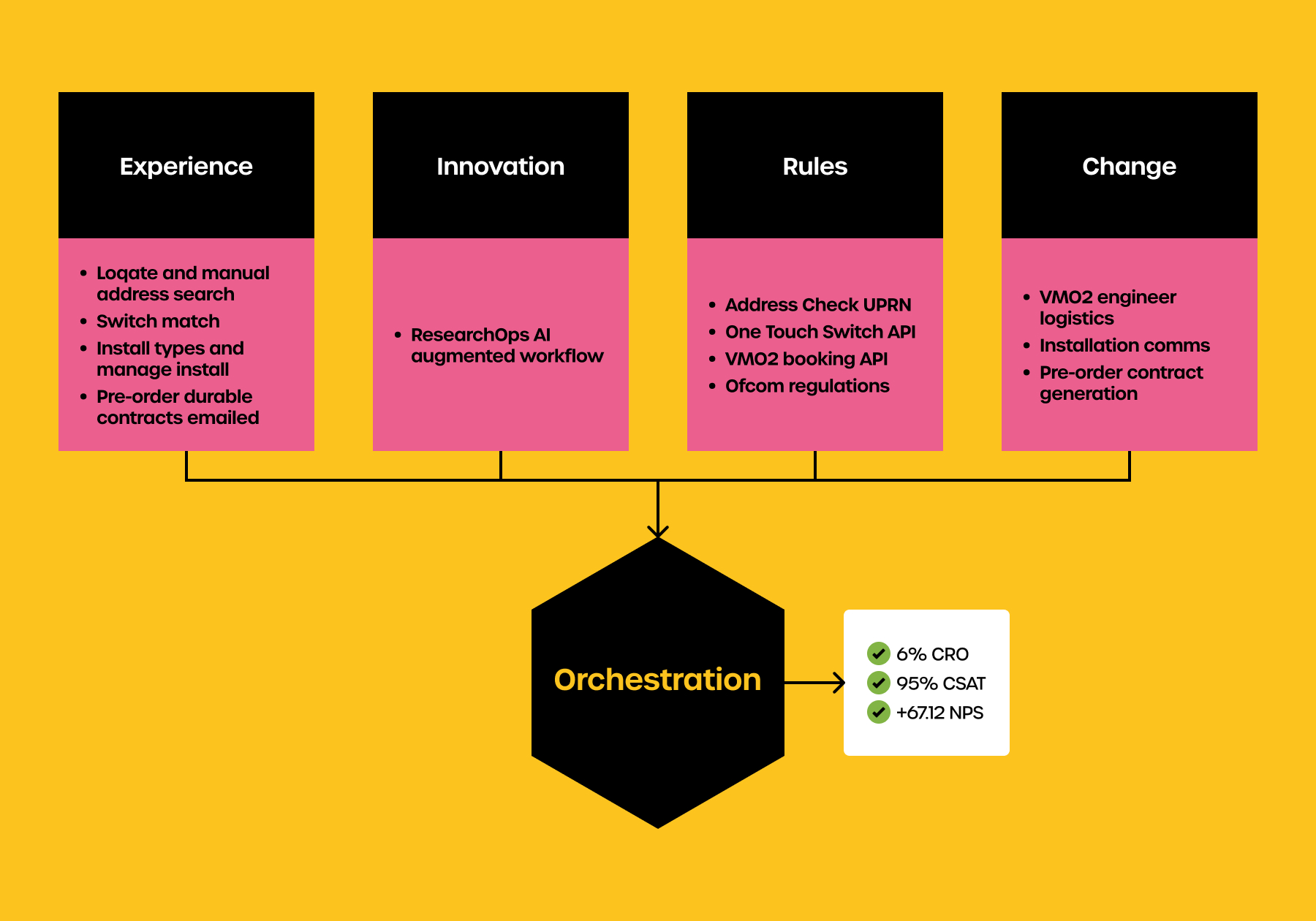
giffgaff is a member-led network built on simplicity. To diversify into Full Fibre, we had to innovate within a legacy, hardware-intensive utility sector. We were rich in digital agility but poor in physical control—a high-stakes "unpaved path" where our squads collided with the operational complexity of our network partner (VMO2). I defined my vertical strategy across the Acquisition and Onboarding lifecycle using a framework of Service Design Orchestration, this model governed our design across four domains—Experience, Innovation, Change, and Rules—to maintain brand trust when legacy tech was slow, non-deterministic, or failed.
Service Design at giffgaff
The Strategy: Orchestrating the Insight Machine
To attack a volatile 0→1 market, we needed a scalable discovery infrastructure. Our rapid experimentation was creating insight silos, causing a delay between user feedback and roadmap decisions.

I led the standardisation of our AI-augmented insight library. By standardising taxonomy and automagically tagging Maze trialist data, we reduced discovery-to-insight cycles. This directly empowered our product leads to make data-driven trade-offs in real-time.
Innovation at giffgaff
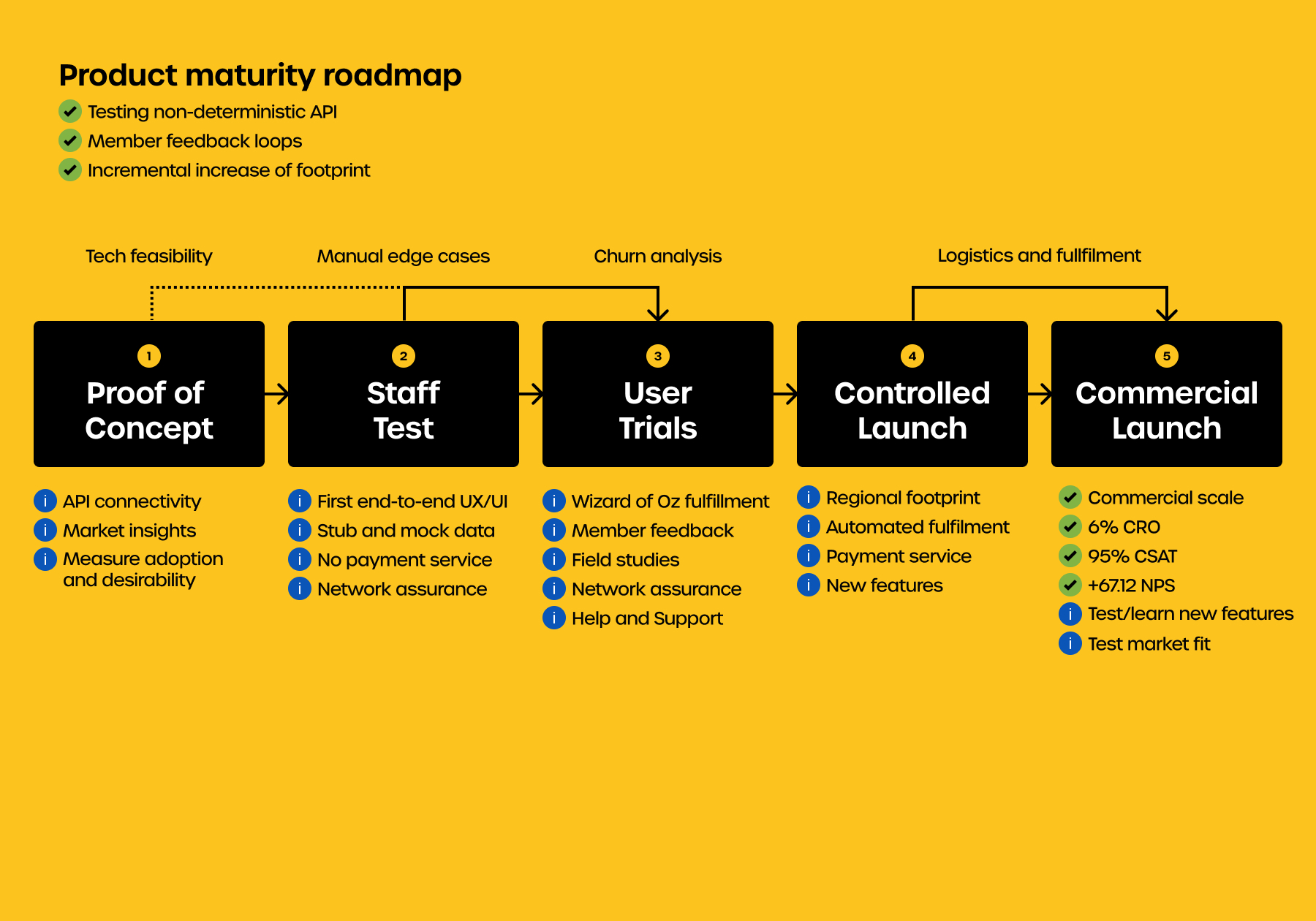
The Roadmap: De-risking via Incremental Scale
Launching a 0→1 vertical in a regulated space required a tiered risk-mitigation strategy. I helped steer the transition from proof of concept and staff alpha, to controlled user trials and regional alpha, before reaching a full National Commercial Launch. This allowed us to stress-test the service logic and physical handoff at increasing volumes, ensuring technical API failures were caught and 'designed for' in the UI before scaling.
De-risking the roadmap
The Engine: Architecting Service Logic
My primary contribution was architecting the underlying service ruleset. Applying service design thinking was essential to orchestrate an optimal user experience across multiple, concurrent, non-deterministic dependencies. My system logic synthesized three major API outcomes and a critical Ofcom regulatory constraint (One Touch Switch) into a single, cohesive user experience. I designed the logic where the Address Check (UPRN/Loqate) was the initial trigger, determining the Property Type (MDU vs. SDU) which then dictated a cascade of constraints, fundamentally altering the Field Force API output (1-stage vs. 2-stage install types) and real-time slot availability. Crucially, the system could not allow a member to finalise their desired Installation Slot (VMO2 Booking API) until the regulatory switch intent (SureSwitch API) was confirmed. By partnering with engineers to enable State-Aware UI for this volatile regulatory and operational window, I ensured that we gestionated user anxiety—explaining the 'why' behind variable lead times based on the property type and switch status. This precise orchestration during these high-ambiguity windows is how we sustained brand trust.
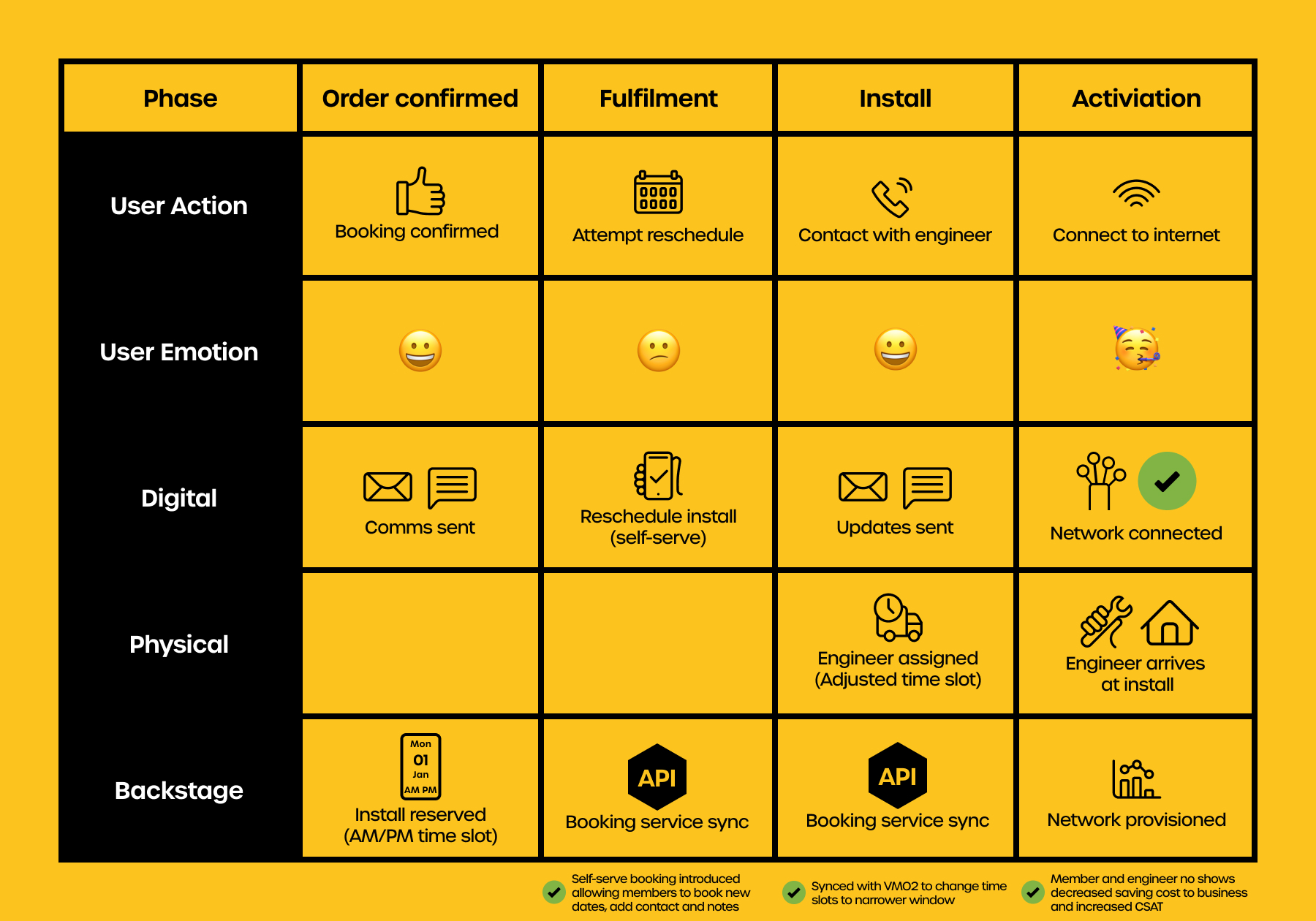
Service Blueprint snapshot
The Handoff: Post-Order Service Transformation
My scope extended through the high-anxiety "Pre-Activation" window—the gap between order and physical connection. Research showed the engineer visit was a peak friction point, causing a 40% pre-install cancellation rate.I used the Service Blueprint not as a static visual, but as a tool to lead technical change. By advocating for a digital service layer, I designed the pre-install experience. This self-serve flow captured critical field force data (Health and Safety and vulnerabilities) and provided proactive updates. Despite unavoidable VMO2 field force delays, we maintained a 95 NPS / recommendation rate from the trialist cohort by managing operational anxiety through the UI.
Orchestrating service design

Measurable Outcomes (Commercial Impact)
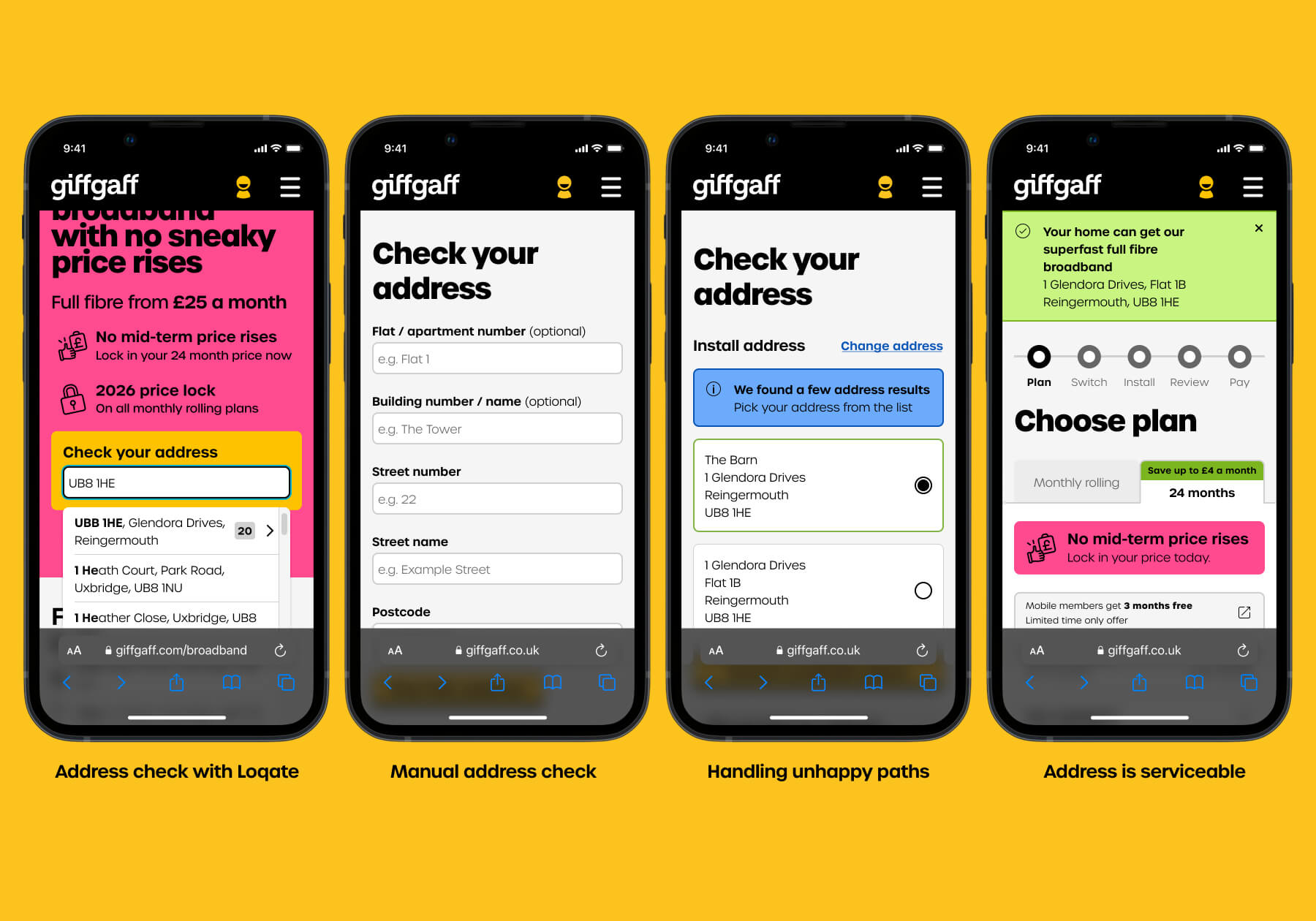
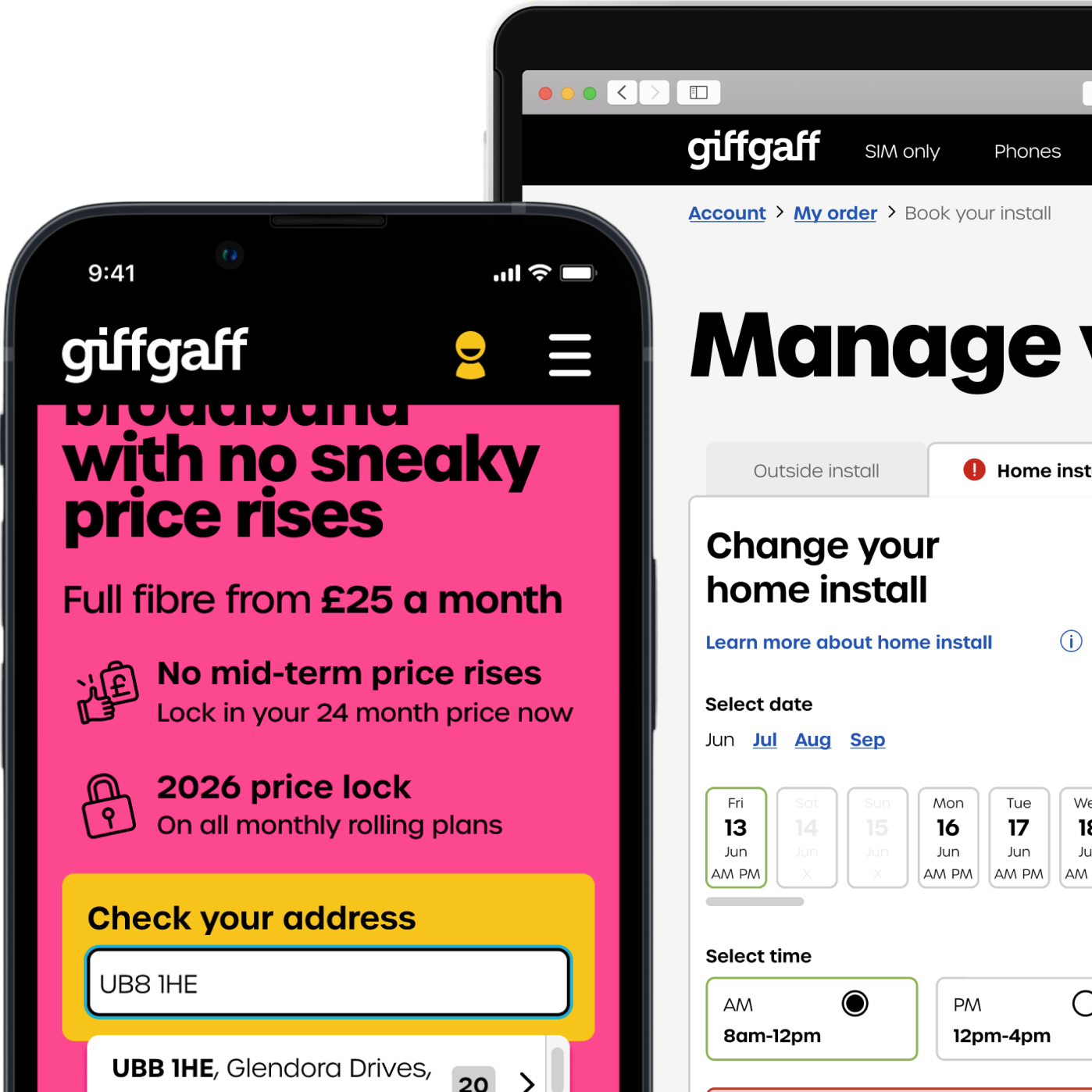
Check address key screens
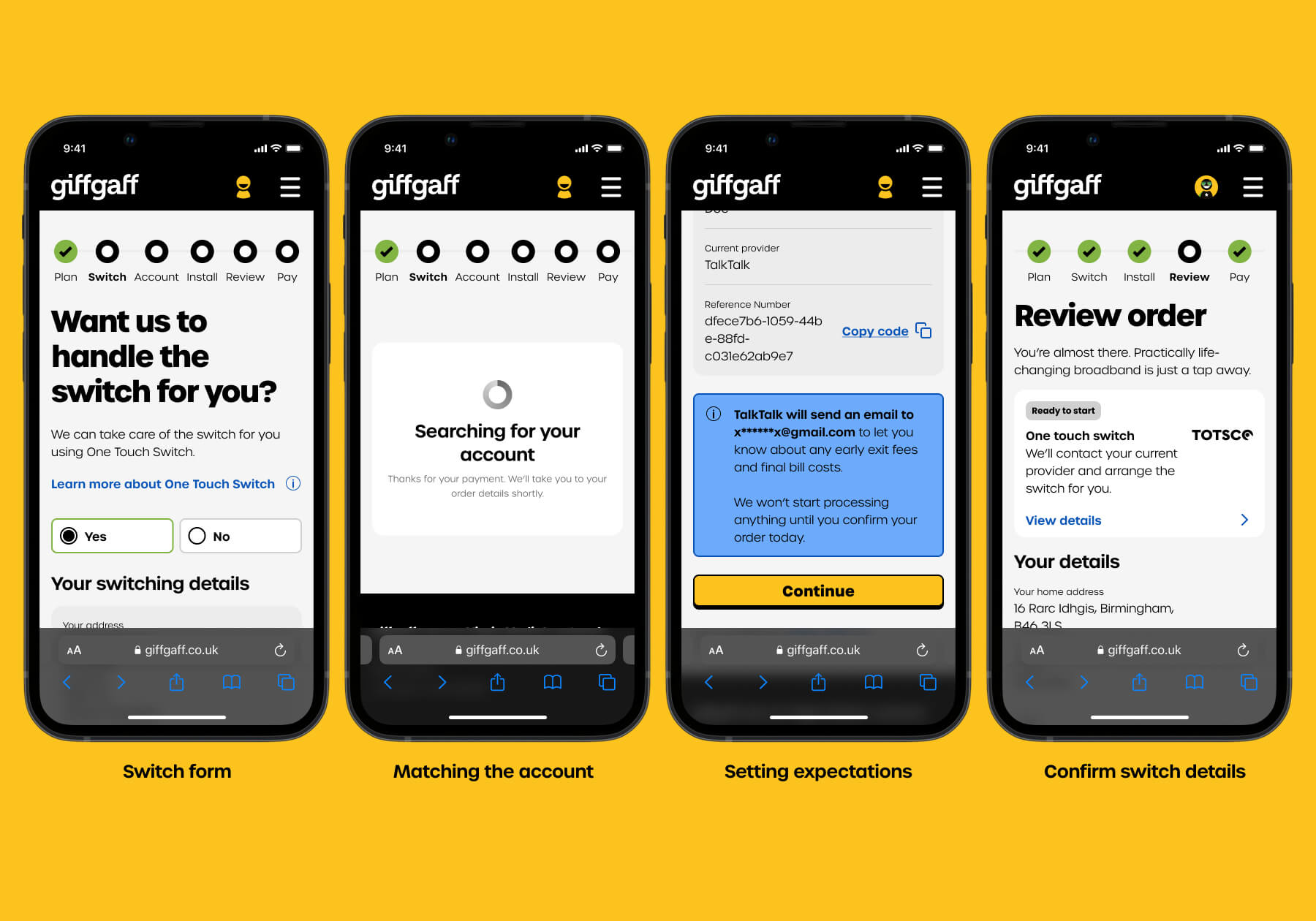
One Touch Switch key screens
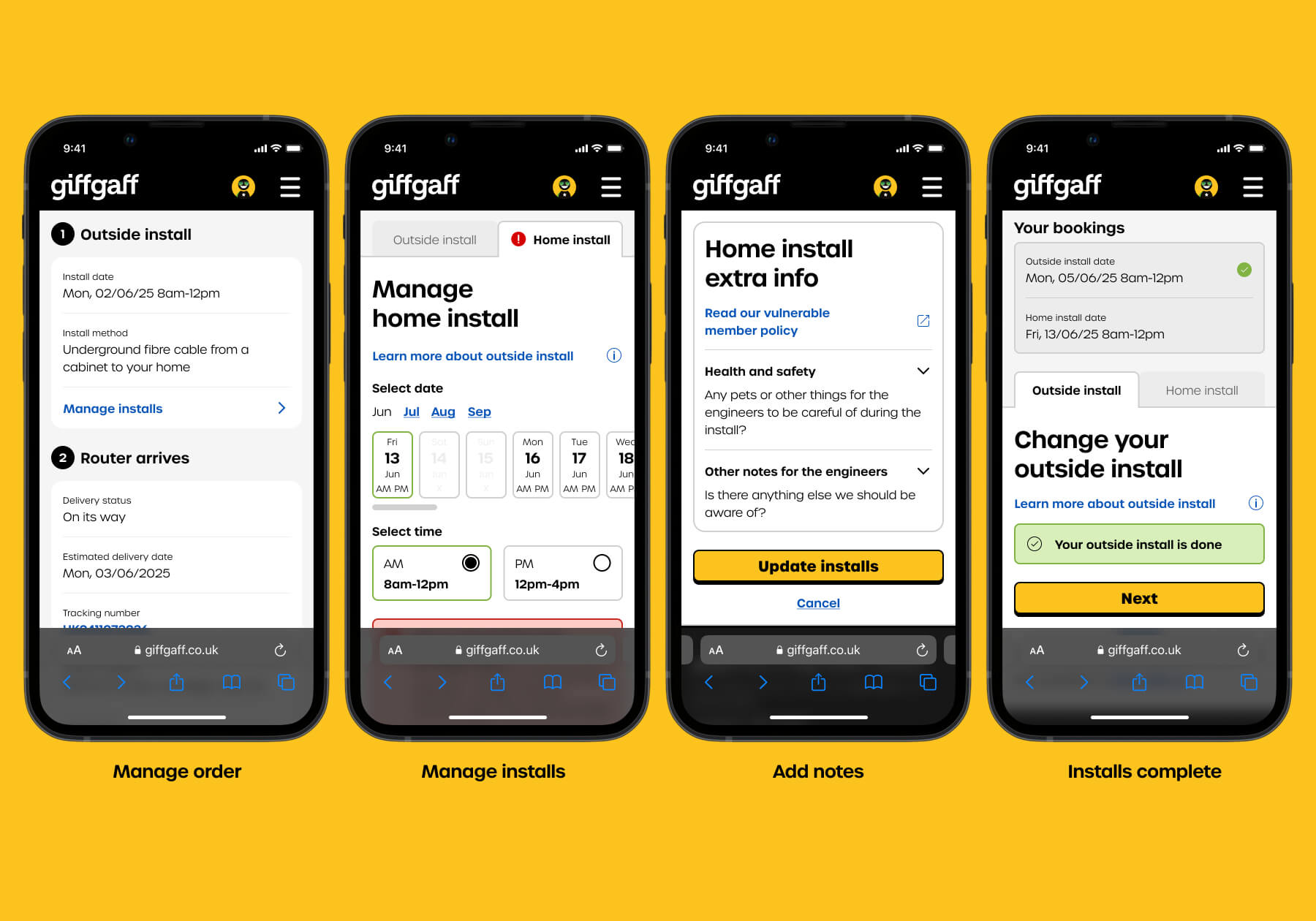
Manage install key screens
Reflections: Synthesising Concept into System
Launching giffgaff’s 0→1 Fibre vertical solidified my ability to apply systems thinking and a structured, logical systems design infrastructure (like the 4-Pillar model) to high-ambiguity product contexts. This methodology is not abstract theory; it is a pragmatic operational tool required to scale user experiences, improve commercial conversion, and manage technical risk.